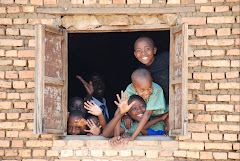
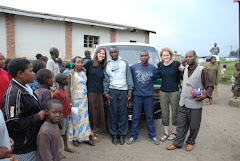
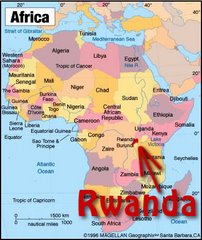
I have been sitting with a handful of tissue, reading everyone's responses. I feel so much love, support, and encouragement, thank you all! My heart has been refilled and my spirit revitalized. It is so wonderful that technology can connect us across continents. I would like to try and respond to individual comments so bare with me. To start off, Allison, the kids appreciate the soccer balls more than you can ever imagine! Here, they wrap up plastic bags very tightly and tie them in a ball. This acts as their soccer ball so you can imagine how excited they were to get a fancy new soccer ball. Allison, you have given months, maybe years of laughter and fun to children in Africa. Rwanda is trying to put together an Olympic soccer team (or football as they call it here) so who knows, some of the children to whom you gave a soccer ball may even grow up to be famous soccer players! This just shows how an small idea like a penny drive turns into something big; a little love and consideration goes a long way. Allison, Cindy, Dezarey, Dakota, Andrea, LiLiana, Ashley, Adrian, Richie, RoniLee, Melissa, Becca, Janie, Ralynne, Kyle, Gabriel, Erendida, Ana and all of the Passage Charter School students are angles of love here in Rwanda. I am so proud to tell Rwandans about the your efforts in raising funds and awareness for Rwanda! Thank you!
In response to the Murambi Memorial. I have been tossing and turning about the event and about my blog entry. I fear that I sensationalize the genocide when describing the memorial; focusing on number and horrific descriptions. This feels insensitive, but I need to try and show through my words the unbelievable atrocity that occurred. If everyone were to see, smell, hear, and feel what went on in Rwanda 13yrs ago I think we would all step back and analyze our role as global citizens. On a more personal level though, as I live in this sensitive society, I can't help but reflect on my personal actions. Every action we take, every word we speak has an effect. If we all are conscious of how we are impaction those around us, we just might begin to create waves of change. One by one, humans can move towards a more compassionate, considerate, respectful, and peaceful existence. There are plenty of times during the day when I become frustrated by the crowd around me pushing and shoving, or the taxi that is crammed full of 17 sweaty and smelly bodies, or the restaurant that takes two hours to prepare my dinner. All eyes are on me though, looking to see how I can respond. I did not intend for this sound preachy. It's just that being in another country, a country that has experienced the worst of conflict, and on a continent which has been labeled as uncivilized has helped me to feel the meaning of humanity and of a human existence. From conflict may we learn to appreciate peace; from death may we learn to value life; from anger may we learn to act with compassion and understanding.
Back to the memorial topic. As I walk through one memorial after another I wonder who the memorials are for and what message they are trying to send. Some of the memorials are in memory of those who lost their lives; others are to be a shocking memorial of the actions taken out by the killers. The later memorials do not seem to be for Rwandans or for morning, they seem to call upon the conscious of the world. When I am as these sites I feel angry and guilty. Angry at the human potential for evil, angry that the world let this evil dominate, angry that situations of desperation that push people to act out violently still exist, angry that the privilege can make a big difference with little sacrifice, and guilty for being a human and for carrying this potential for anger, evil, and silence. I am not being silent now though. After experiencing Rwanda, I am going to shout until my voice becomes hoarse. You all are listening and I appreciate that more than I can express, but I hope that we can work together to put action behind our voices.
Speaking of voices, yesterday I heard the voice of political reconciliation. We had the privilege of attending a Gacaca. Gacaca is the ancient court method that Rwanda readopted to help deal with the vast number of perpetrators. Thirteen years later and they are still having hearings. The literal meaning of the word means something like grass, community and unity. The perpetrators are brought forth to be tried by their community. The purpose of a Gacaca is to bring unity and for the perpetrators to come forth and ask for forgiveness. It is one way that the people of Rwanda are healing deep wounds and looking for reconciliation. This paragraph does not do justice, but I am running out of time. Please ask questions because the intent of Gacaca is noble, but it also has its flaws.
My love to all! Amahoro, peace
Friday, July 13, 2007

Monday, July 9, 2007
I ran to Africa with a great amount of excitement and anticipation that I would find personal strength and solidarity. I have augmented these inner qualities, but I have also found myself valuing shared experiences with close friends and family. It is the common title to my life: strong individualism accented through shared experiences. I believe that I have aged a great many years over the past month; cultivating a deep personal wisdom. I am right where I need to be and I look forward to reconnecting with everyone!
Sunday, July 8, 2007
Rwandan University Life
Just returned from a draining weekend in Butare, the academic center of Rwanda housing the National University. It felt like a college town, an African version of course. The purpose of our visit was to attend and help out with a Darfur rally that our friend Totto was putting on along with an energetic and curious group of his fellow university peers. The event was unfortunately disappointing. I was looking forward to seeing what ideas Rwandan students had about the situation in Sudan. It was apparent that the students were empathetic to the genocidal situation, yet an evaluation of the causes and possible course of international action was not covered. Very little information or action planning occurred. The brief background that was presented was sensationalized; the images were of starving babies and battered women. It made me uncomfortable to see, but I was more uncomfortable with the Rwandan crowd’s reaction to the images. Some people gasped, or clicked in dismay while others laughed awkwardly. Uncomfortable laughter to violence seems is a common reaction, yet not a healthy one in my opinion.
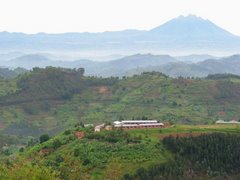
I too am struggling though with how to process the emotional impact of seeing the destruction of a human life. This weekend, my cup over spilled. Murambi Memorial, the most graphic and overwhelming genocide memorial. Murambi is a village high up on a scenic plateau. It used to be the site of a rural secondary school. During the genocide, Tutsi’s and moderate Hutu's were told to take refuge in the school; they were informed that they would be safe. Nearly 50,000 people fled to the school but they were not safe. The sheer number of victims was overwhelming; the natural beauty that silently witnessed the massacre was disturbing; our tour guide who was the only surviving member of his family and who has stayed on as groundskeeper ever since 1994 was painful; the plaque recognizing the site where French troops had played volley ball during Operation Turquoise was enraging(Operation Turquoise is an infuriating research topic for anyone interested in learning more about the international role in the 1994 genocide. A French documentary entitled Operation Turquoise was being filmed in Butare during our stay and should be out soon); the memorial was more than my soul could take. Like other memorials, the site remained untouched and unchanged. Yet, at Murambi the victims had not been moved. The last moment of life was seen on their mummified faces. I could never be prepare to face what I saw as I walked into one room after another. The odor was overwhelming, but it was not the odor of death, it was the odor of sheer evil. I wish I could end by saying a blank comment like, may they rest in peace, but I fear that the victims do not rest in peace.
I too am struggling though with how to process the emotional impact of seeing the destruction of a human life. This weekend, my cup over spilled. Murambi Memorial, the most graphic and overwhelming genocide memorial. Murambi is a village high up on a scenic plateau. It used to be the site of a rural secondary school. During the genocide, Tutsi’s and moderate Hutu's were told to take refuge in the school; they were informed that they would be safe. Nearly 50,000 people fled to the school but they were not safe. The sheer number of victims was overwhelming; the natural beauty that silently witnessed the massacre was disturbing; our tour guide who was the only surviving member of his family and who has stayed on as groundskeeper ever since 1994 was painful; the plaque recognizing the site where French troops had played volley ball during Operation Turquoise was enraging(Operation Turquoise is an infuriating research topic for anyone interested in learning more about the international role in the 1994 genocide. A French documentary entitled Operation Turquoise was being filmed in Butare during our stay and should be out soon); the memorial was more than my soul could take. Like other memorials, the site remained untouched and unchanged. Yet, at Murambi the victims had not been moved. The last moment of life was seen on their mummified faces. I could never be prepare to face what I saw as I walked into one room after another. The odor was overwhelming, but it was not the odor of death, it was the odor of sheer evil. I wish I could end by saying a blank comment like, may they rest in peace, but I fear that the victims do not rest in peace.
Thursday, July 5, 2007
Education in Rwanda
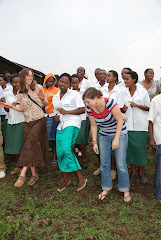
I am in a writing/ reflective/sentimental mood so I will just keep going! I wanted to post a quick note for all of my Passage Charter School (PCS) supporters/students/co-workers. We have visited many schools over the past couple weeks and every time I walk into a class room I am reminded of our little PCS high school and all of the remarkable accomplishments that are achieved by us all. The resilience to overcome past obstacles and the desire to learn that I see amongst the youth here in Rwanda is wonderful reminder of the same qualities that I see at PCS. In other words, being her has once again reminded me what extraordinary rock stars the students of PCS are! I want to try now and paint a picture of education in Rwanda. Some of the schools that I have visited are nice, meaning they have an actual school building, a few chalk-board, and desks for most students; these schools did not have enough bathrooms, no electricity or windows, and they were severely overcrowded. Other schools are in an even more dismal situation. Last week we visited a school in a refugee camp. Most of the students there had grown up in the Democratic Republic of Congo. There parents had fled to the Congo to escape the violence in Rwanda, but when the violence then spread into the Congo, they fled back into Rwanda. The camp was an attempt to help the refugees, but Rwanda is very limited in what it can offer. When I walked into the school here in the refugee camp, I was faced with children who had no shoes, ragged cloths, and runny noses. Yet, they presented us with beautiful singing, dancing, and a creative play on reconciliation after the genocide. They refused to let life take away their song and spirit!
To Congo and Quickly Back
The days and adventures have slipped by! Whirlwind catch-up: travelled to the eastern province for a visit to the African Millennium Village Project (sustainable development in action with less flaws than I expected); wove baskets with a group of women; observed a clinic and saw the absolute desperation for accessible health care, doctors, nurses, and dependable medication; was audience to a play on reproductive health and teen pregnancy; learned about a radio organization that is using a fictional weekly radio soap opera to discuss how the genocide occurred and how to work out some of the underlying cultural and social issues, way cool; went climbing through the hills of western Rwanda; started my service placement with the Fight Illiteracy Youth Organization helping them to create a brochure, magazine, nutrition curriculum, and much more; stayed a night at my second home-stay with a wealthy family who lived far out of Kigali and next to a post-genocide insane asylum, interesting. So many thought and experience to share, but this entry is going to focus on my trip into the Democratic Republic of Congo (DRC).
Gysini, Rwanda is on Lake Kivu and shares a boarder with Goma, Congo. Travel across the boarder is unadvisable, but we organized a guide to take a group of us across for the day. The Rwandan genocide of 1994 is not a closed issue; it has merely spilled over the boarder into Congo. The Hutu militia, Interhamwe, has fled into the DRC and continues to violently target various groups within the Congolese population. Yet, such stories are only a peep in the international media. As we walked across the boarder, I could feel a change in atmosphere. The people were visible upset by our presence and would glare as we walked by. Goma is still in a state of utter disarray ever since the 2003 volcanic irruption. A line runs though the town outlining the destructive lava flow. In addition to the piles of volcanic destruction, the streets were absolutely littered with trash. Amidst the trash, ostentatious homes spotted the streets. The severe separation between economic classes made my stomach turn. A haunting billboard displayed a picture of a Caucasian baby advertising diapers yet the children scampering around on the streets rarely even had shoes or pants. Mercedes sped about the streets and in the driver’s seat was often a male of Indian or Middle Easter descent. The blue-beret UN official that marched around were also mostly from India and the Middle East which I flagged mentally as a further research topic? The UN seems to hold a strong presence, in Goma at least. Countless UN vehicles went back and forth along the main street and a UN sponsored refugee camp was tucked in between the lake and the Rwandan boarder. The condition of the camp seemed to be nice, especially in comparison to the refugee camp we had visited the previous day on the Rwandan side.
I just read a statistic placing Rwanda as the poorest country in Eastern Africa. The level of development in Rwanda is remarkable given socio-political strife but they really have no internal industry. The only substantial export is coffee, yet the country does not have the infrastructure to process and distribute what they grow. Economic development is a priority amongst the entire population. In the case of DRC, it is one of the most resource rich countries in all of Africa and yet it reeks of corruption. Rwanda: violent conflict amongst a population struggling under the weight of severe poverty and resource scarcity; Congo: violent conflict amongst a population cursed with resource abundance. There is so much I have to say, all for now though.
Amahoro (Peace)
Gysini, Rwanda is on Lake Kivu and shares a boarder with Goma, Congo. Travel across the boarder is unadvisable, but we organized a guide to take a group of us across for the day. The Rwandan genocide of 1994 is not a closed issue; it has merely spilled over the boarder into Congo. The Hutu militia, Interhamwe, has fled into the DRC and continues to violently target various groups within the Congolese population. Yet, such stories are only a peep in the international media. As we walked across the boarder, I could feel a change in atmosphere. The people were visible upset by our presence and would glare as we walked by. Goma is still in a state of utter disarray ever since the 2003 volcanic irruption. A line runs though the town outlining the destructive lava flow. In addition to the piles of volcanic destruction, the streets were absolutely littered with trash. Amidst the trash, ostentatious homes spotted the streets. The severe separation between economic classes made my stomach turn. A haunting billboard displayed a picture of a Caucasian baby advertising diapers yet the children scampering around on the streets rarely even had shoes or pants. Mercedes sped about the streets and in the driver’s seat was often a male of Indian or Middle Easter descent. The blue-beret UN official that marched around were also mostly from India and the Middle East which I flagged mentally as a further research topic? The UN seems to hold a strong presence, in Goma at least. Countless UN vehicles went back and forth along the main street and a UN sponsored refugee camp was tucked in between the lake and the Rwandan boarder. The condition of the camp seemed to be nice, especially in comparison to the refugee camp we had visited the previous day on the Rwandan side.
I just read a statistic placing Rwanda as the poorest country in Eastern Africa. The level of development in Rwanda is remarkable given socio-political strife but they really have no internal industry. The only substantial export is coffee, yet the country does not have the infrastructure to process and distribute what they grow. Economic development is a priority amongst the entire population. In the case of DRC, it is one of the most resource rich countries in all of Africa and yet it reeks of corruption. Rwanda: violent conflict amongst a population struggling under the weight of severe poverty and resource scarcity; Congo: violent conflict amongst a population cursed with resource abundance. There is so much I have to say, all for now though.
Amahoro (Peace)
Wednesday, June 27, 2007
Nyamata Memorial Visits
Yesterday we traveled to the southern part of the country, no less than 30Km from the Burundi boarder. Our group of 17 packed into one mutato (taxi bus) and ventured for our first time outside of Kigali. Once we left the city limits the newly paved road took us meandering through the hills lined with banana groves. Mud huts dotted the hills and every once in a while we would see small villages under construction. These villages are part of a governmental mandate as they believe it is safer for the people to consolidate into villages as they would be more vulnerable living isolated and scattered throughout the country side. Much attention has been paid to the southern region of Rwanda. Historically, Tutsi’s were forced to relocate in the south because it was thought to be less inhabitable and the Hutus were establishing their power center in the north. When the genocide broke out, the Interhamway moved down into the south and attacked the Tutsi’s in mass. We visited two churches that were horrific genocide sites. The memorials were kept almost exactly as they had been left in April of ’94; windows remained shattered, blood stains were unwashed, doors hung on their hinges, bars that had been pried apart by the perpetrators were still bent, and holes dug by the victims in desperation were left unfilled. Personal items such as toot brushes, shoes, jewelry, cloths, and identity cards were laid out for display. The skeletons were arranged by body type and lined on shelves. The first church was the site of 5,000 deaths, the second 10,000. There is no way to describe the scene or the emotions one feel when faced with such horror. As I stared into the hollow eyes of the skeletons I felt a commitment to upholding the resolution of never again.
Juxtaposed to the memorial sites, we visited a couple different development project sites. The first was near-and-dear to my heart. It was a NGO and government sponsored project to help fight poverty and malnutrition by building sustainable stoves. The stoves were made out of a creative mixture of sand and mud that with a limited amount of heat could stay warm for hours. This project has supplied people with jobs, clean boiled water, and they use about ¾ less firewood which is a benefit to the environment and also to the women and girls who have to go far distances to collect firewood. Now, instead of collecting wood, the girls are able to go to school! Some of the villages nearby have received large stoves in the school so that the children are able to receive sustenance during the school day. Amazing huh! When asked how the stove project has helped to create peace and reconciliation, the villagers responded that making the stoves has pulled them together and has given them hope for the future. Their children study together and are growing into a collaborative existence.
Juxtaposed to the memorial sites, we visited a couple different development project sites. The first was near-and-dear to my heart. It was a NGO and government sponsored project to help fight poverty and malnutrition by building sustainable stoves. The stoves were made out of a creative mixture of sand and mud that with a limited amount of heat could stay warm for hours. This project has supplied people with jobs, clean boiled water, and they use about ¾ less firewood which is a benefit to the environment and also to the women and girls who have to go far distances to collect firewood. Now, instead of collecting wood, the girls are able to go to school! Some of the villages nearby have received large stoves in the school so that the children are able to receive sustenance during the school day. Amazing huh! When asked how the stove project has helped to create peace and reconciliation, the villagers responded that making the stoves has pulled them together and has given them hope for the future. Their children study together and are growing into a collaborative existence.
Sunday, June 24, 2007
A Portrait of Kigali, Rwanda
In the furry of my thoughts, in the previous entry I failed to introduce you to my temporary home so welcome to Rwanda!
Sitting and watching the street activity has given me one of the most poignant summaries of the country, its history, prospects for the future, and of Rwandan living. The city streets weave around lush, green, hilly country side. The cool climate and green beauty has surprised and impressed me almost as much as the beauty of the people.
I don’t always feel welcome though. As I walk down the streets I am greeted by calls of mozungo-white person. The first time I heard this title used I was out for an early morning walk. I hung my shoulders and wanted to pull my black jacket up over my face. I felt targeted, uncomfortable, and like an invader. Accenting physical differences to create separation/segregation is painful. In that moment of personal discomfort I experienced the years of pain and segregation that the Rwandan people have carried. As I turned to find my caller I spotted an elderly man grinning with a toothless smile and waving energetically; my pain was self-imposed. Since then I have been hollered at countless times. Sometimes in a friendly/curious manner and sometimes it is yelled from behind a frown and stern eyes. The white skin of German, French, and
Subscribe to:
Posts (Atom)